


What is laser cutting? Technology, process, and detailed applications.
14-10-2026 15
Laser cutting has established a dominant position thanks to its absolute precision, superior speed, and high versatility.
Mục lục
Laser cutting is currently one of the most advanced and widely used mechanical processing technologies, playing a pivotal role in modern manufacturing. Thanks to its ability to produce cuts with extreme precision and high speed, as well as create complex profiles, this method has gradually replaced manual or traditional technologies.
Laser cutting is a thermal processing method that uses a high-energy laser beam focused onto the material's surface. This energy causes the material to melt, vaporize, or burn locally; combined with a high-pressure gas stream that blows away the excess material, it produces a sharp, precise cut following a pre-programmed profile.
The laser cutting process involves the following key steps:
A standard laser cutting system comprises the following key components:
Current metal laser cutting technology is extremely diverse, meeting most of the strict requirements of the mechanical industry: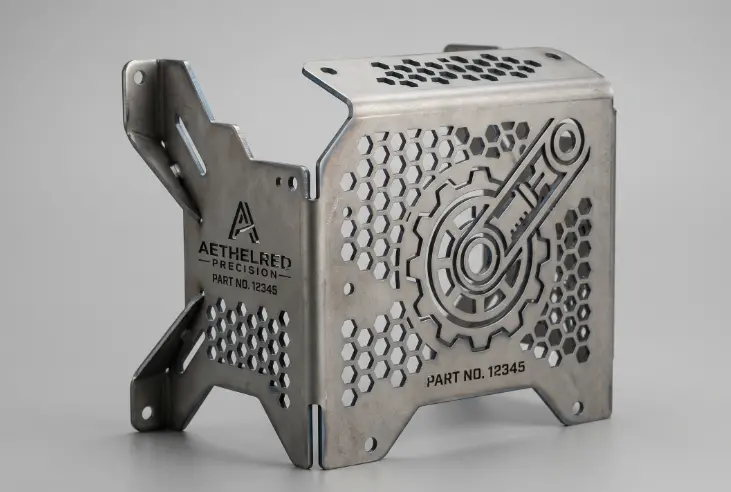
Note: Cutting thickness capability depends heavily on the machine's power (ranging from 1 kW to over 30 kW) and the type of assist gas used.
Thanks to its high precision and versatility, laser cutting technology is utilized across a wide range of industrial and everyday sectors:
- Mechanical engineering and industrial manufacturing
- Advertising and interior/exterior decoration
- Fashion, footwear, and handicrafts
The machining process at reputable mechanical workshops typically follows these eight steps:
To achieve a sharp, burr-free cut with precise tolerances, the laser cutting process relies heavily on the optimal combination of the following factors: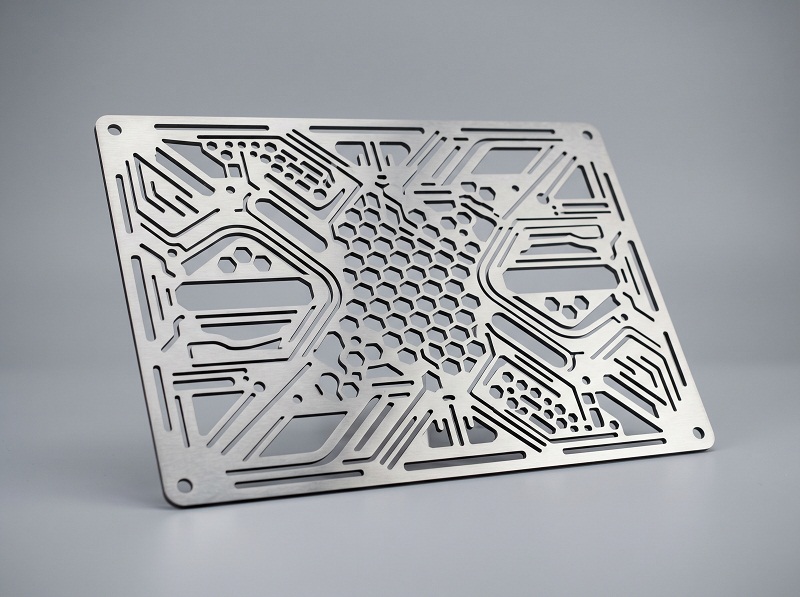
Quick comparison of laser cutting versus other machining methods:
Selection guide:
During the operation of a laser cutting machine, operators may encounter several common issues that affect the product's aesthetics and structural integrity:
Laser cutting service quotes are not fixed but are calculated flexibly based on various technical factors derived from the design drawings:
If you require metal laser cutting services, please submit your drawings (CAD/PDF) along with details regarding the material, thickness, and quantity to receive expert advice and an accurate quotation.
Email: cokhichinhxac@intech-group.vn or contact our hotline for consultation: 0966 966 205 - 0988 365 586.
What is laser cutting?
Laser cutting is a thermal processing method that uses a high-energy laser beam focused onto the material's surface. This energy causes the material to melt, vaporize, or burn locally; combined with a high-pressure gas stream that blows away the excess material, it produces a sharp, precise cut following a pre-programmed profile.
- How does CNC laser cutting differ from manual laser cutting?
- CNC laser cutting: Fully automated and computer-controlled using G-code/M-code derived from CAD drawings. It ensures extremely high precision with minimal tolerances (measured in thousandths of a millimeter) and allows for the mass production of identical parts.
- Manual/handheld laser cutting: Generally less common, heavily reliant on the operator's skill, and offers lower precision; it is primarily used for repair work or simple processing tasks.
Operating principles of laser cutting technology
The laser cutting process involves the following key steps:
- Laser generation and amplification: The laser source generates a high-energy, monochromatic light beam, which is then amplified and transmitted via a system of mirrors or fiber optics.
- Laser beam focusing: A focusing lens system concentrates the beam's total energy onto an extremely small point (the focal point), creating immense energy density.
- Heating and melting: The intense heat at the focal point causes the material to melt or vaporize instantly.
- Assist gas for material ejection: Gases such as oxygen, nitrogen, or compressed air are injected coaxially with the laser beam to blow away molten slag, while also protecting the lens and cooling the cutting zone.
- CNC control of the cutting head: The cutting head moves automatically according to CAD designs, driven by a precision CNC system.
Structure of a laser cutting machine
A standard laser cutting system comprises the following key components:
- Laser source & laser cutting head: The core components that generate energy and direct the beam.
- Focusing lens & drive system: Servo motors that ensure smooth, precise movement of the cutting head.
- Machine bed & frame: A stable, vibration-resistant foundation.
- Auxiliary systems: Assist gas, cooling systems, and fume extraction/dust handling systems to maintain a safe working environment.
- CNC controller & programming software: The system that processes CAD/CAM drawings and converts them into toolpaths.
Common types of laser cutting technology
1. Fiber laser cutting
- Characteristics: Uses fiber optic technology for laser beam transmission; short wavelength (approximately 1.064 µm).
- Suitable materials: Various types of sheet metal (stainless steel, carbon steel, aluminum, copper, brass, etc.).
- Advantages: Extremely high electrical-to-optical conversion efficiency (>30%), very high cutting speeds for thin metal, low maintenance costs, and long light source lifespan.
- Limitations: Less effective than CO₂ lasers for cutting large non-metallic materials.
- Applications: Widely used in industrial sheet metal laser cutting.
2. CO₂ laser cutting
- Principle: Uses an electrically excited mixture of CO₂, N₂, and He gases to generate a long-wavelength laser (approximately 10.6 µm).
- Suitable materials: Excellent for both metals and non-metals (wood, mica, acrylic, leather, plastic, fabric, etc.).
- Pros/Cons: Produces extremely smooth cut edges on non-metals, but offers lower efficiency compared to Fiber lasers and entails higher maintenance costs (mirror replacement and gas refills).
3. Nd:YAG laser cutting
- Features: Utilizes a Neodymium-doped Yttrium Aluminum Garnet (Nd:YAG) crystal.
- Processing capabilities: High pulse energy; typically used for welding and cutting small metal parts, engraving, or micro-drilling that requires exceptional precision.
Comparison of Fiber Lasers and CO₂ Lasers
| Criterion | Fiber Laser | CO₂ Laser |
| Laser source | Fiber | CO₂ gas |
| Efficiency | High | Lower |
| Metal cutting speed | High, superior | Lower |
| Maintenance | Relatively low | Higher |
| Non-metallic materials | Limited | Wide range of applications |
Which materials can be laser cut?
Current metal laser cutting technology is extremely diverse, meeting most of the strict requirements of the mechanical industry:
- Laser cutting of stainless steel: Stainless steel 304, 316, 201 gives shiny cuts, no black rust, no need for burr grinding.
- Laser cutting of carbon steel: Steel plate, SS400 steel, structural steel with diverse thicknesses.
- Laser cutting of aluminum: Requires a high-power machine because aluminum reflects heat and light well.
- Laser cutting of copper and brass: Requires specialized equipment and optimal parameters to handle high reflectivity.
- Other materials: Titanium, galvanized steel, special metals.
Reference table for laser cutting capabilities based on material thickness
Note: Cutting thickness capability depends heavily on the machine's power (ranging from 1 kW to over 30 kW) and the type of assist gas used.
| Material type | Common thickness range | Primary assist gas |
| Inox | 0.5 mm - 25 mm+ | Nitơ (N2) |
| Carbon steel | 0.5 mm - 35 mm+ | Oxygen (O2) or Compressed air |
| Aluminum | 0.5 mm - 20 mm | Nitrogen (N2) or Compressed air |
| Copper / Brass | 0.5 mm - 12 mm | Nitơ (N2) |
Advantages and Limitations of Laser Cutting Technology
- Outstanding advantages:
- Ultra-high precision: Tolerances remain within a very tight range (±0.1mm or less).
- Fine, smooth cuts: Cuts are exceptionally sharp, with minimal thermal distortion.
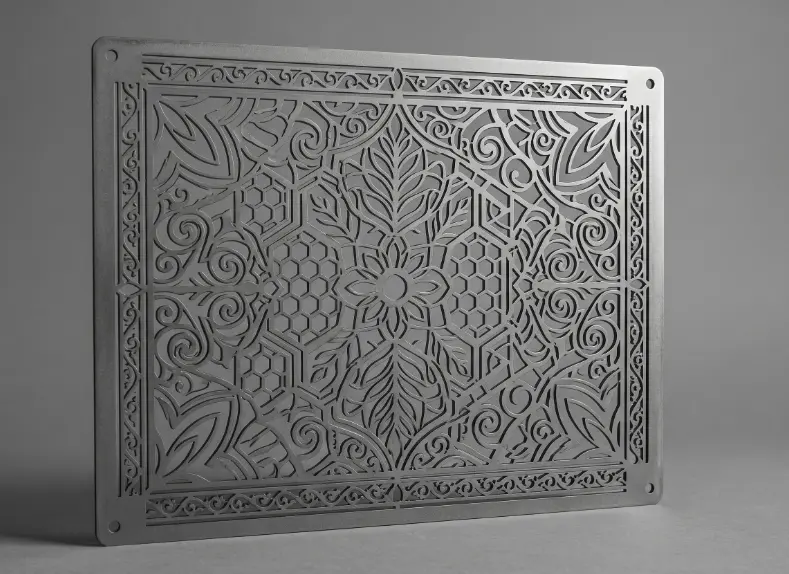
- Complex profile machining: Easily creates intricate floral patterns, artistic lettering, and complex zigzag machine components that are difficult to produce using traditional mechanical methods.
- High speed and automation: Boosts productivity and reduces labor costs.
- High flexibility: Well-suited for everything from single-unit prototyping to large-scale industrial production runs.
- Limitations to note:
- The initial investment cost for machinery and equipment is very high.
- It requires operators to possess specialized expertise and strong blueprint-reading skills.
- For excessively thick metals, alternative machining methods should be considered to optimize costs.
Practical applications of laser cutting
Thanks to its high precision and versatility, laser cutting technology is utilized across a wide range of industrial and everyday sectors:
- Mechanical engineering and industrial manufacturing
- Custom fabrication of machinery components, electrical cabinets, and industrial equipment frames.
- Cutting of gusset plates, structural steel elements, and heavy-duty load-bearing parts for factory, bridge, and road construction.
- Advertising and interior/exterior decoration
- Cutting 3D lettering from stainless steel, acrylic, and aluminum composite panels for storefront signage and brand logos.
- Fabricating artistic partitions, decorative gate patterns, and metal stair railings using CNC laser cutting to create a modern, sophisticated aesthetic.
- Fashion, footwear, and handicrafts
- Engraving and cutting intricate patterns on fabric, genuine leather, or synthetic leather for footwear and handbags.
- Creating souvenirs, architectural models, and wooden toys, leveraging the technology's ability to produce sharp, highly detailed laser engravings.
Professional CNC laser cutting process
The machining process at reputable mechanical workshops typically follows these eight steps:
- Step 1: Receiving drawings: Obtain design files (CAD, DWG, or DXF formats) from the client and clearly identify the material type and thickness.
- Step 2: Reviewing drawings: Check dimensions, tolerances, hole locations, diameters, and any special technical requirements.
- Step 3: CNC cutting programming: Arrange parts on the sheet metal layout to optimize material usage and minimize scrap.
- Step 4: Setting machine parameters: Configure power, speed, focal length, gas type, and gas pressure to suit the material.
- Step 5: Loading material: Securely position the metal sheet on the laser cutting bed.
- Step 6: Cutting: The machine automatically executes the cutting process according to the programmed instructions.
- Step 7: Product inspection: Evaluate dimensional accuracy, cut quality, burr formation, and flatness.
- Step 8: Finishing and handover: Clean the product, remove burrs (if necessary), package, and deliver to the client.
Factors affecting laser cutting quality
To achieve a sharp, burr-free cut with precise tolerances, the laser cutting process relies heavily on the optimal combination of the following factors:
- Laser power: Determines penetration capability and material processing speed. Excessive power can cause edge burning, while insufficient power results in an incomplete cut.
- Cutting speed: Must be adjusted according to power and material thickness. Excessive speed leads to incomplete penetration, whereas speeds that are too slow generate excess heat, causing deformation and significant burr formation.
- Focal length and focal point position: Whether the focal point lies on the surface, at the surface level, or deep within the material determines the kerf width and the smoothness of the cut edge.
- Assist gas type and pressure: Oxygen (O2), Nitrogen (N2), or compressed air at the appropriate pressure effectively blows away molten dross and protects the surface from oxidation.
- Cutting head standoff distance: The distance between the nozzle and the material surface directly affects the dynamics of the gas flow.
- Material cleanliness: Rust, grease, or dirt on the workpiece causes laser beam scattering, locally degrading cut quality.
- Laser source quality and nozzle condition: A stable source combined with a nozzle free from deformation, wear, or dross buildup ensures a perfectly focused beam.
- CNC system precision: Ensures smooth movement without vibration when navigating corners or complex curves.
How does laser cutting differ from other machining methods?
Quick comparison of laser cutting versus other machining methods:
- Laser Cutting vs. Plasma Cutting:
- Laser: Sharp cuts, extremely tight tolerances, minimal burrs; optimal for thin to medium-thickness materials.
- Plasma: High speed, lower investment cost; specialized for rough cutting very thick steel plates, though cut edges tend to be beveled and prone to slag accumulation.
- Laser Cutting vs. Oxy-Gas Cutting:
- Laser: Capable of cutting a wide range of materials (stainless steel, aluminum, steel) with high precision and minimal thermal distortion.
- Oxy-gas: Limited to cutting thick carbon steel; results in a large heat-affected zone, rough edges, and higher dimensional inaccuracy.
- Laser Cutting vs. Waterjet Cutting:
- Laser: Faster and more cost-effective for cutting metal; utilizes heat for the cutting process.
- Waterjet: Cold cutting process (generates no heat); capable of cutting virtually any material (including stone, glass, and thick non-metallic materials), but operates at slower speeds and entails higher operating costs.
- Laser Cutting vs. CNC Punching:
- Laser: Offers absolute flexibility for complex profiles and intricate patterns; requires no tooling costs.
- CNC Punching: Extremely fast for high-volume production of standard holes, but shape capabilities are limited by available tooling/dies.
Selection guide:
- Choose laser cutting for high precision, complex profiles, fine cuts, reduced finishing time, and when working primarily with sheet metal (stainless steel, steel, aluminum).
- Choose plasma or oxy-gas cutting for cutting extremely thick steel plates at low cost when technical requirements are not overly stringent.
- Choose waterjet cutting for thick materials when avoiding heat-related effects is necessary.
- Choose CNC punching for the mass production of repetitive parts with standard shapes on thin sheets.
Common laser cutting errors: Causes and solutions
During the operation of a laser cutting machine, operators may encounter several common issues that affect the product's aesthetics and structural integrity:
| Common Issue | Primary Cause | Remedy |
| Excessive dross on the bottom surface | Cutting speed too fast/slow, low assist gas pressure, or incorrect focal point position. | Adjust speed, increase assist gas pressure, or check the focal point position. |
| Edge burning | Laser power is too high relative to cutting speed, or oxygen supply is excessive (when cutting steel). | Reduce laser power, increase cutting speed, or switch to inert gas or compressed air. |
| Incomplete cut | Insufficient machine power for the material thickness, dirty lens, or incorrect focal length. | Clean the optics, verify power settings against standard charts, or clean the workpiece surface. |
| Incorrect cutting dimensions | CAD programming errors, mechanical backlash in the drive system, or failure to compensate for the cutting beam diameter (kerf offset). | Review drawing data; calibrate the X/Y axis accuracy of the CNC machine. |
| Scratched cut surface | Unstable gas supply, scratched or dirty lens, or inconsistent machine speed. | Check the gas supply system; replace the nozzle and protective lens if worn. |
| Material deformation | Heat concentrated at a single point for too long due to excessively slow speed or improper toolpath settings. | Optimize the cutting sequence, increase movement speed, or use pulse cutting mode. |
Quote for custom laser cutting services
Laser cutting service quotes are not fixed but are calculated flexibly based on various technical factors derived from the design drawings:
- Material type and thickness: Hard or thick materials require more processing time and higher machine power.
- Cutting path length and number of holes: The more complex the profile and the greater the number of holes, the longer the machine runtime.
- Production volume: Large-volume orders offer more cost-effective unit prices compared to small-batch or single-item orders.
- Post-processing requirements: Deburring, polishing, weld cleaning, or finishing (painting/coating).
Contact for a quick quote:
If you require metal laser cutting services, please submit your drawings (CAD/PDF) along with details regarding the material, thickness, and quantity to receive expert advice and an accurate quotation.
Email: cokhichinhxac@intech-group.vn or contact our hotline for consultation: 0966 966 205 - 0988 365 586.
