


Machine parts and components are small yet crucial elements that make up complete, modern machinery systems. Machining high-hardness components consistently presents a significant technical challenge for machine shops and manufacturing plants. Parts subject to heavy loads, continuous friction, or requirements for long-term dimensional stability are typically manufactured from high-hardness materials or undergo heat treatment.
Learn about machine component machining
Machining refers to a range of techniques and technologies used to remove material from raw stock to create desired components.
The machining of high-hardness components is a process that shapes raw workpieces into precision-engineered machine parts. This task demands meticulousness, high quality, and significant professional expertise from the machine operator.
Thanks to its precision and excellent mechanical properties, machining is an outstanding method for producing complex tools, durable parts, and high-quality prototypes.
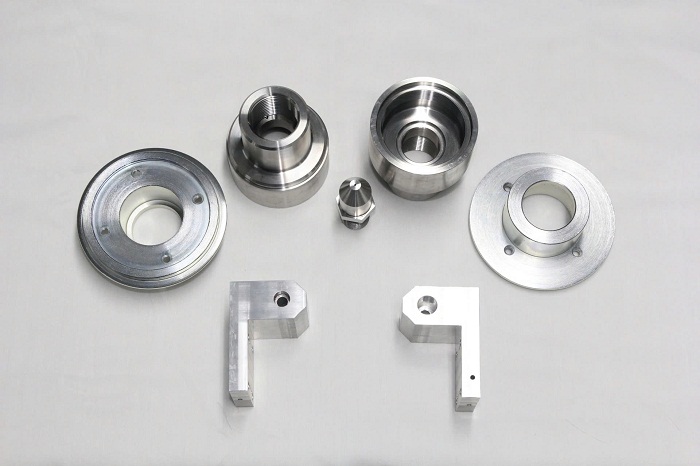
Characteristics of machine components are high hardness
High-hardness machine components offer superior technical characteristics but impose stringent manufacturing requirements:
- High resistance to deformation and wear: Enables components to withstand heavy loads and maintain a long service life under high-friction conditions.
- Difficult to machine & high heat generation: Extreme cutting forces during processing generate significant heat at the contact zone, causing rapid tool wear or chipping.
- Strict control requirements: Dimensional tolerances (often at the micrometer level), roundness, concentricity, and surface roughness ($Ra$) must be tightly managed, while minimizing the risk of thermal deformation or micro-cracking.
High-hardness machine components are commonly machined.
Depending on their function within production lines or industrial equipment, high-hardness components are categorized into several main groups:
1. Shafts, Pins, and Transmission Components
- Products: Drive shafts, dowel pins, load-bearing shafts, bushings, and bearing housings.
- Technical Requirements: Extremely strict requirements for concentricity, roundness, and run-out. Outer surfaces typically undergo surface hardening and precision cylindrical grinding to minimize the friction coefficient.
2. Gears, Cams, and Wear-Resistant Components
- Products: Hardened gears, helical gears, mechanical cams, guide rollers, and drive discs.
- Technical Requirements: Tooth profiles and cam working surfaces require high meshing precision. The surface layer following heat treatment must be uniform, and tooth deformation must be avoided to prevent noise and uneven wear during operation.
3. Mold and Jig Components
- Products: Mold cores, cavities, punches, dies, inserts (for plastic/metal injection molding), forming plates, and guide pins.
- Technical Requirements: High geometric precision, superior surface finish (mirror-like finish for plastic injection molds), and dimensional stability under high-temperature and high-pressure operating conditions.
Applications for component machining:
- It makes the process of machining machine components extremely easy and boosts productivity.
- It yields products with exceptionally high precision.
- It saves a significant amount of time and effort compared to traditional machining methods.
- While machine-based metal processing does not require operators to possess the same high level of manual cutting skills as in the past, it demands a greater depth of knowledge regarding mechanics, machine operation, and cutting tools—requiring a vast amount of technical expertise.
Intech Mechanical's component machining technology offers high precision.
High-rigidity metal components serve as critical parts of complete machinery systems. These components require high-precision machining to meet exact customer specifications.
Intech is committed to meeting the essential need for high precision in component manufacturing by utilizing advanced technologies, specifically, highly automated CNC machines capable of achieving tight tolerances.
- Machine component machining process:
- Product design drawings: Review and study detailed drawings; understand the intended use, part classification, technical requirements, and technological characteristics of the component.
- Determine the production type: Single-unit, batch, or mass production.
- Select the workpiece and blank manufacturing method: Choose a blank with appropriate dimensions and a suitable manufacturing method.
- Determine the sequence of steps and operations; select work-holding setups for each operation and define the machining methods.
- Select appropriate tools, equipment, and fixtures, as these determine product quality.
- Define machining methods for each stage and step of the process.
- Select suitable tooling for the required stages.
- Assign specific stages to skilled workers or technicians.
- Perform mechanical machining using machinery such as CNC machines.
- Inspect product quality upon completion.
CONTACT FOR CONSULTATION & QUOTATION:
If you require the machining of high-hardness machine components, please submit your technical drawings and specifications to the Intech Mechanical consultation team to receive an optimal processing solution and a highly competitive quote.
