


Laser cutting of aluminum is one of the most advanced and widely used metal fabrication solutions today. Given the material's specific characteristics—which impose rigorous technical requirements—this process demands a deep understanding of the technology, operational parameters, and procedural workflows.
If you are looking for a reputable, high-quality aluminum laser cutting service in Hanoi that offers competitive pricing, Intech Mechanical (Cơ khí Intech) is a premier, trusted partner. We provide comprehensive fabrication services tailored to meet even the most demanding specifications derived from your technical drawings.
What is aluminum laser cutting?
Laser cutting of aluminum is an advanced manufacturing technology that utilizes a high-energy laser beam focused onto the surface of an aluminum sheet. Under the influence of intense, concentrated heat, the material at the point of contact melts or vaporizes. Simultaneously, a high-pressure assist gas is blown through the cut kerf to expel the molten metal, resulting in a sharp, precise cut that follows a design programmed into a computer.
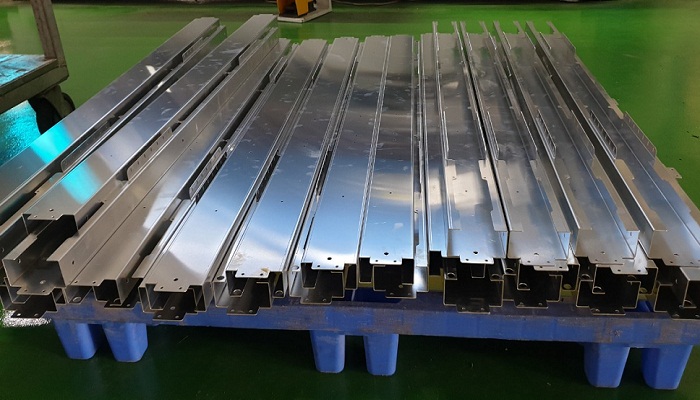
Why is aluminum a relatively difficult material to cut using a laser?
Compared to steel or stainless steel, aluminum requires more demanding machine operation techniques for the following reasons:
- High laser reflectivity: Aluminum is highly reflective to both light and laser beams. This causes a portion of the energy to bounce back, which can damage the lens and the laser source if the equipment lacks specialized protective systems.
- High thermal conductivity: Heat is rapidly conducted away from the cutting point to the surrounding areas, rather than remaining concentrated at the point of the cut.
- Heat propagation: If the cutting speed and power are not precisely controlled, the heat can easily spread, causing thermal deformation of the aluminum sheet.
Differences compared to cutting steel or stainless steel: Cutting aluminum requires higher laser power, faster cutting speeds, and stricter requirements regarding the assist gas (typically, high-purity nitrogen is used to prevent yellowing or burnt edges).
Common aluminum laser cutting technologies
1. Fiber laser cutting
- Characteristics: Utilizes fiber-optic technology for laser beam transmission.
- Advantages: Offers very high electrical-to-optical conversion efficiency (up to 30–40%) and extremely fast cutting speeds for thin aluminum sheets. The laser beam has a short wavelength (approximately 1.064 μm), which allows for better absorption by aluminum surfaces. This is the standard technology for modern industrial production.
2. CO₂ laser cutting
- Characteristics: Uses a CO2 gas mixture as the laser medium.
- Limitations: Due to a longer wavelength (10.6 μm), it is more strongly reflected by aluminum; it also offers lower efficiency and higher maintenance costs compared to fiber lasers. Consequently, it is currently less preferred for applications involving aluminum.
3. High-power laser
Used for cutting thick aluminum plates, this application requires a power source ranging from 6kW to 12kW or higher. High power enables faster cutting speeds and the efficient processing of thick aluminum workpieces.
Quick comparison table: Fiber vs. CO₂ for aluminum cutting
| Criteria | Fiber Laser | CO₂ Laser |
| Aluminum cutting capability | Excellent, optimal | Possible, but limited |
| Energy efficiency | High | Lower |
| Cutting speed | Very high | Lower |
| Maintenance costs | Relatively low | Higher |
| Primary application | Mass industrial production | Specialized applications |
Common types of aluminum that can be laser-cut
- Aluminum 5052: Offers good corrosion resistance and formability; commonly used for electrical enclosures, equipment casings, and general mechanical components.
- Aluminum 5083: Features higher strength than 5052, along with excellent wear resistance and durability in marine environments; used in shipbuilding and load-bearing mechanical structures.
- Aluminum 6061: The most common structural aluminum alloy; offers high strength and is easily machined (milled, turned) or laser-cut; used for machine parts and structural frames.
- Aluminum 6063: Possesses excellent formability and a high-quality surface finish; primarily used for extruded profiles, architectural applications, and construction.
- Anodized Aluminum: Surface-treated to form a hard oxide layer. When cutting, parameters must be carefully adjusted to avoid damaging the colored finish surrounding the cut line.
What is the maximum thickness of aluminum that can be laser-cut?
The cutting capacity of the machine depends on several factors: laser power, the specific aluminum alloy, assist gas pressure, nozzle diameter, and cutting speed.
Reference table for cutting thickness based on machine power:
- 1 kW – 2 kW: Suitable for cutting thin aluminum sheets (less than 3 mm).
- 3 kW – 6 kW: Capable of processing medium-thickness aluminum sheets (from 3 mm to 8 mm).
- 8 kW – 12 kW and above: Capable of cutting thick aluminum sheets—ranging from over 10 mm to several tens of millimeters with high precision.
* Note: Actual cutting capacity may vary depending on the part geometry, the quality of the laser source, and the skill level of the machine operator.
Key technical parameters for laser cutting aluminum
To ensure a clean cut free of burrs and highly accurate technicians must strictly control the following parameters:
- Power source output: Determines the energy used to melt the material.
- Cutting speed: If too fast, the material may not be cut through; if too slow, it can cause edge burning and the formation of thick burrs.
- Focal length and focal position: Directly affect the kerf width and surface quality.
- Assist gas pressure: Facilitates the removal of molten aluminum dross; insufficient pressure can lead to dross accumulation on the underside of the material.
- Nozzle diameter: Must be selected based on the material thickness to optimize gas flow.
- Cutting head height: The stable distance maintained between the nozzle and the surface of the aluminum sheet (typically kept between 0.8 and 1.5 mm).
Professional aluminum laser cutting process
- Step 1: Receive drawings from the client (in CAD, DXF, DWG, or PDF formats).
- Step 2: Determine the precise aluminum grade, thickness, and blank dimensions.
- Step 3: Review and optimize the drawings, then create a nesting layout to maximize material efficiency.
- Step 4: Program the CNC laser cutting machine.
- Step 5: Place the aluminum sheet onto the machine bed and calibrate the origin coordinates.
- Step 6: Perform a test cut on the first piece to verify tolerances and the quality of the cut edges.
- Step 7: Proceed with mass production according to the order specifications.
- Step 8: Inspect the quality of the finished products (dimensions, squareness, surface condition, and presence of burrs).
- Step 9: Perform post-cutting finishing (e.g., deburring or cleaning, if requested).
- Step 10: Carefully package the products and deliver them to the client.
Factors affecting the quality of the cut
- Flatness and surface quality of the input aluminum sheet.
- Chemical composition of the aluminum alloy grade.
- Stability of the laser source and assist gas.
- Professional qualifications and practical experience of the machine programmer/operator.
Common issues and how to fix them
- Burnt or discolored cut edges: Caused by using the wrong type of gas (e.g., accidental inclusion of oxygen) or insufficient nitrogen pressure. --> Solution: Use pure nitrogen and increase the gas pressure.
- Excessive burrs on the bottom surface: Caused by an excessively high cutting speed or an incorrect focal point. --> Solution: Reduce the cutting speed, readjust the focal point, and inspect the nozzle.
- Failure to cut through the material: Caused by insufficient power or highly reflective material. --> Solution: Decrease the cutting speed, increase the laser power, or clean the surface of the workpiece.
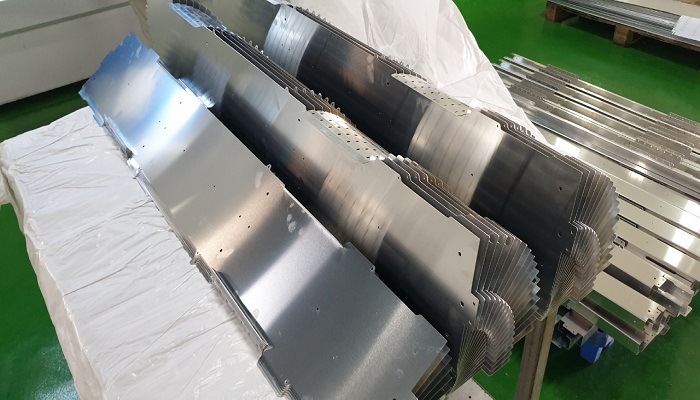
Practical applications of laser cutting for aluminum
- Mechanical Engineering & Manufacturing: Machine enclosures, shims, flanges, and equipment mounting brackets.
- Electrical & Electronics: Industrial electrical cabinets, amplifier enclosures, and component mounting frames.
- Automation: Machine frame components, conveyor system parts, and lightweight drive mechanism components.
- Architecture & Construction: Perforated aluminum facade panels, decorative partitions, and ornamental railings.
- Interior Design: Designer furniture, display shelving, and high-end decorative accessories.
Price quote for custom aluminum laser cutting services in Hanoi
When you submit a request for processing, the cost of laser-cutting aluminum is calculated based on a combination of key factors, including: the aluminum grade and material thickness, the dimensions of the raw sheet, the total cutting length and the number of holes to be pierced, the complexity of the design profile, as well as any stringent tolerance requirements or additional processing needs.
The total cost is typically estimated using the following reference formula:
Total processing cost = Material cost + Laser cutting cost + Setup/programming cost + Finishing costs (if applicable)
Reference pricing: The cost for laser-cutting aluminum sheets typically ranges from several thousand to tens of thousands of VND per meter of cut, depending on the material thickness (from 1mm to 10mm+) and the order quantity. For an accurate quote based on your specific drawings, please contact us directly via our Hotline or Zalo.
Reliable, affordably priced aluminum laser cutting service in Hanoi
To help clients optimize both their budget and time, Intech Mechanical offers comprehensive, top-quality laser cutting services.
- We provide laser cutting for aluminum based on any technical drawing—from single-piece orders to large-scale production.
- We offer complimentary support for reviewing, editing, and optimizing your design files.
- Our end-to-end manufacturing process includes: Laser cutting → CNC bending → Punching/Tapping → Welding → Powder coating or aluminum anodizing.
- Every project undergoes rigorous quality inspection before being carefully packed and delivered to your location.
