


What is milling?
Milling is a machining process that uses a rotating milling cutter to remove material and create a product with the desired shape and dimensions. The process involves two primary movements: the cutting motion provided by the rotating cutter and the feed motion resulting from the relative movement between the cutter and the workpiece.
What is CNC milling?
 |
CNC milling is similar to CNC turning: both processes rely on computer instructions to manufacture parts. However, they differ in their operational methods. In CNC milling, the workpiece remains stationary while the cutting tool rotates around it. Conversely, CNC turning involves keeping the cutting tool stationary while the workpiece rotates.
Classification of milling technologies
1. Classification by machine structure:
- Vertical milling machine: The spindle is perpendicular to the machine table (most common).
- Horizontal milling machine: The spindle is parallel to the machine table (suitable for large parts).
- Bed mill: Suitable for machining heavy, large-sized parts.
2. Classification by level of automation:
- Conventional milling: Manually operated; typically used for simple parts and low-volume production.
- CNC milling: Fully automated operation controlled by G-Code/M-Code programs.
3. Classification by number of axes:
- 3-Axis milling machine: Most common (X, Y, Z).
- 4-Axis Milling Machine: Adds an A or B rotary axis (for machining round or more complex parts).
- 5-Axis Milling Machine: For machining complex surfaces, aerospace components, and challenging molds.
Applications of CNC Milling
CNC milling is ideal for creating angular shapes, channels, slots, holes, curves, and chamfers, among other complex geometries and features. It also offers short lead times, as parts can be produced within minutes, whereas conventional manufacturing processes (such as injection molding) can take days—or sometimes weeks—to complete.
CNC milling machines are compatible with a wide range of materials, including metals, plastics, and composites. This is a key advantage of CNC machining over additive manufacturing processes like 3D printing, which are generally limited to plastics and specific metal components.
CNC milling is also an excellent choice if you require parts with a superior surface finish; this subtractive manufacturing process supports various finishing options, including painting, chrome plating, and anodizing.
Common Materials for CNC Milling
* Metal Materials:
- Aluminum: 2021, 5052, 6061, 6063, 7075, etc.
- Steel: 303, 304, 316, stainless steel, tool steel, carbon steel, etc.
- Brass
- Copper
- Special Alloys: Kovar, Invar, Inconel, Titanium, MoCu, etc.
* Plastic materials: POM, PTFE, PEI, PA6
The importance of CNC milling:
In Vietnam, the precision engineering sector has been highly valued in recent years as the country undergoes industrialization and modernization to integrate into the global economy.
For precision engineering—as well as industries dealing with metal, wood, and plastics—CNC milling is an indispensable process for manufacturing high-precision, quality-assured products.
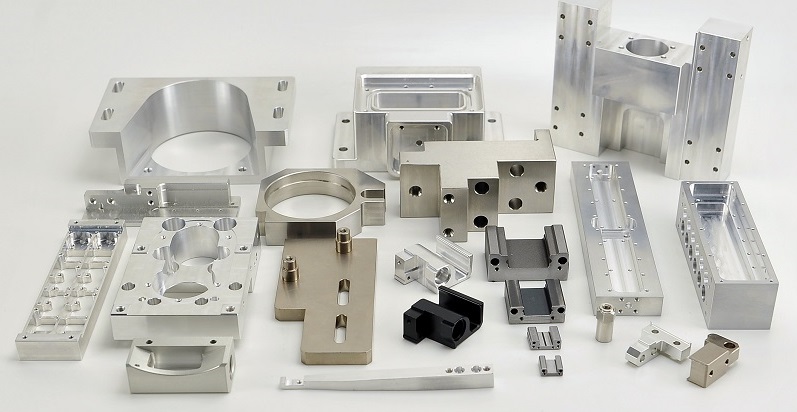
As the market expands, a business's investment in CNC milling machines signifies a distinct competitive advantage. This strength fosters further growth and earns the company high regard from partners, paving the way for sustainable collaborations.
Intech Group is a multi-sector corporation specializing in high-precision engineering, industrial automation, and technology. Consequently, Intech's precision machining division serves as a vital, indispensable component in meeting customer needs and ensuring the quality of Intech's high-tech products.
What does the basic milling process entail?
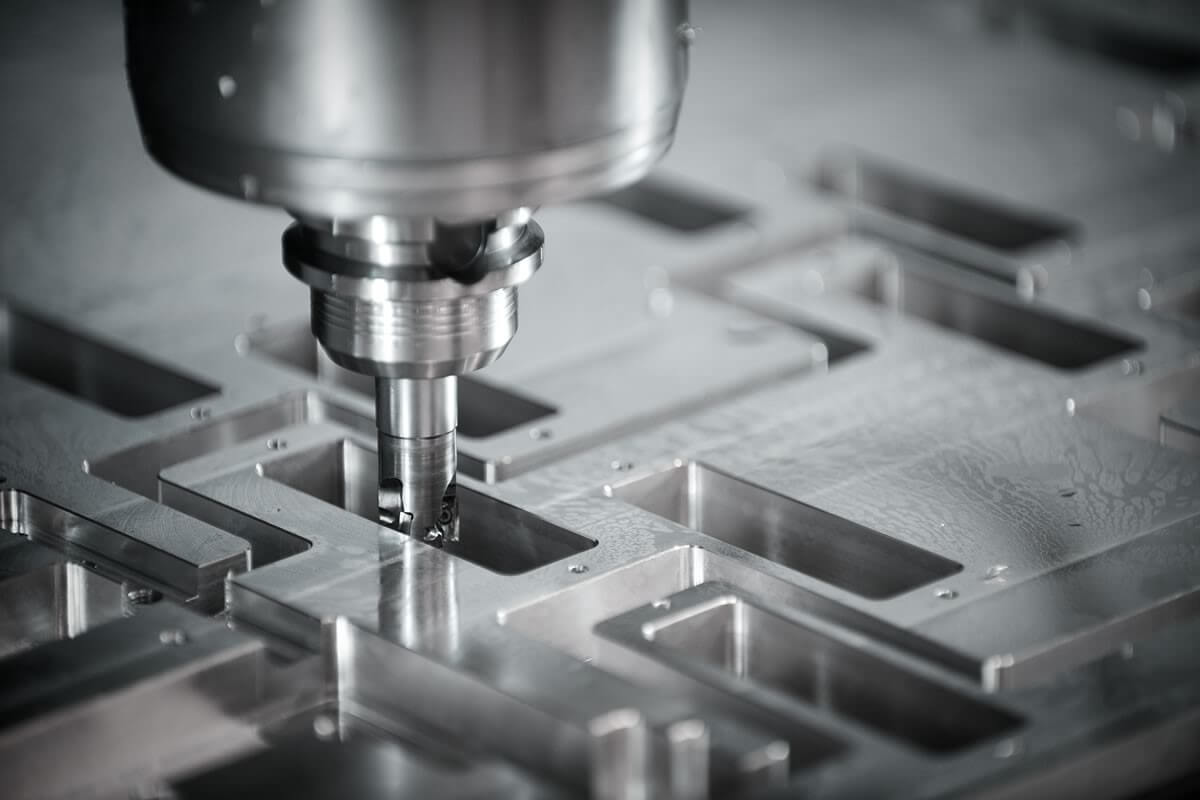
Producing a high-quality milled part involves numerous steps and stages. Here, Intech Precision Engineering outlines the fundamental steps to serve as a reference for those new to the precision engineering industry:
 |
1. Inspecting the workpiece against the drawing and verifying the material:
Measure the workpiece dimensions against the drawing specifications and verify the material type.
2. Rough milling the workpiece:
Determine the rough milling strategy based on the part's specified dimensions and the actual measured dimensions of the workpiece.
3. Reviewing design data and creating the CAD model:
Examine the detailed drawing for specifications regarding dimensions, geometry, surface roughness, and material.
4. CAM programming (Converting CAD files into machining code):
- CAM (Computer-Aided Manufacturing) evolved from CAE (Computer-Aided Engineering) and is typically used in conjunction with CAD (Computer-Aided Design).
- Verify the CAM program.
5. CNC Milling Machine Setup:
- Check part dimensions.
- Establish 2D and 3D datums.
- Inspect and align the workpiece.
6. CNC Milling Machine Operation:
- Operate the machine to process the part.
- Measure and verify dimensions against the required drawings.
Advantages and disadvantages of CNC milling:
CNC milling is highly efficient for mass production, offering excellent machining consistency and stable quality. However, costs are high, and programming is time-consuming for small batches, making it less economical.
4 Key advantages of CNC milling:
- The number of tools required is significantly reduced, eliminating the need for complex tooling setups to machine parts with intricate shapes. Modifying a part's shape or dimensions simply requires updating the machining program, making the process ideal for new product development and improvement.
- Machining quality is stable, with high precision and repeatability, meeting stringent quality requirements.
- Production efficiency is higher for multi-variety and mass production; it reduces time spent on production preparation, machine adjustment, and process inspection, while also shortening cutting times through the use of optimal cutting parameters.
- It can machine complex profiles that are difficult to produce using conventional methods and can even process areas that are not directly visible.
CNC milling is an automated process that reduces the need for manual labor and offers numerous advantages. However, the CNC milling method also has several notable disadvantages, as outlined below:
3 Main disadvantages of the milling process:
- One of the primary drawbacks of CNC milling is the high cost of purchasing the necessary equipment. It also requires highly skilled maintenance personnel.
- Another disadvantage is the potential for significant downtime; if the machine requires maintenance or a component malfunctions, all work halts until the issue is resolved.
- Finally, it is important to note that not all materials are suitable for this type of machinery.
To leverage strengths and mitigate weaknesses, Intech Precision Engineering has equipped itself with a suite of high-quality CNC machines, including CNC milling machines, CNC lathes, CNC wire-cut EDM machines, CNC grinders, CNC laser cutters, CNC press brakes, and CNC punch presses.
Intech Precision Engineering matches specific products to the most suitable machines, thereby maximizing strengths and ensuring optimal quality, cost-efficiency, and production schedules.
Common CNC milling operations today
CNC milling is capable of both single-unit and mass production depending on requirements, and the process can produce parts with tolerances as tight as +/- 0.0005 inches. It is flexibly applied across various industries for specialized components. Below are the most common CNC milling operations currently in use:
- Face milling
Face milling is considered the simplest milling operation; it is performed using a face mill that rotates around an axis perpendicular to the workpiece surface. The cutting tool is mounted on a flat surface, and the cutting depth is adjusted by turning the table's cross-feed screw.

Face milling is the simplest operation in CNC milling.
- Side milling
Side milling is the operation of milling a vertical surface on the side of a workpiece using a side milling cutter. The depth is set in a similar manner to face milling.
- Angular milling
CNC angular milling is the process of creating an angled surface on a workpiece, distinct from the original right angles. The resulting angled groove or surface can vary depending on the type and profile of the cutter used on the machine.
- Plain milling (Slab milling)
This is currently the most widely used type of milling; it creates flat surfaces parallel to the axis of the milling cutter. The milling machine is started after selecting the appropriate spindle speed and feed rate.
- Slot and groove milling
This involves flexibly milling slots and grooves of various shapes and dimensions using standard milling cutters.
- Helical milling
This is the process of milling a helix or groove around the surface of a cylindrical or conical workpiece. The process is performed by swiveling the machine table to the required helix angle, then rotating and feeding the workpiece against the rotating cutting edges of the milling cutter.
Additionally, there are many other notable CNC milling operations, such as straddle milling, gang milling, profile milling, saw milling, and cam milling.
What are the 6 basic steps to operate a CNC milling machine
There are many different types of CNC milling machines; here, Intech Precision Mechanics outlines the general steps for operating a 3-axis CNC milling machine, which is the most common type used in CNC milling operations:
- Step 1: Preparation—cleaning the machine and the workpiece surface.
- Step 2: Powering on the machine.
- Step 3: Selecting and installing the necessary cutting tools.
- Step 4: Mounting and setting up the workpiece.
- Step 5: Adjusting parameters: setting tool offsets and safety tool compensation.
- Step 6: Loading the CNC program, applying tool compensation for machining, and running the machine.
How much does custom CNC milling cost?
CNC milling is a machining process that uses computer-controlled machines to transform raw materials into finished products. The cost of CNC milling depends on the material type, design complexity, part dimensions, and the expertise of the machinist.
Everyone seeks a balance between cost, quality, turnaround time, and service. So, how do you calculate the cost of your custom CNC-milled parts? You can contact the Intech Mechanical team for technical support and an instant quote to determine the production costs for your custom machined components.
CNC Milling Services at Intech Mechanical
Let Intech Mechanical bring your designs or product concepts to life with our premium CNC milling services. We provide CNC milling solutions for virtually any design, working with a wide range of metals and plastics.
Using our state-of-the-art multi-axis milling machines, our team of highly skilled engineers and machinists ensures your product is manufactured correctly the first time. We also employ a dedicated quality control team to inspect and verify that all CNC-machined parts meet customer specifications as well as mandatory standards and regulations.
Our CNC milling services complement our other manufacturing and finishing capabilities, providing a comprehensive and satisfying solution for your product development project.
Contact Information:
- Hotline: 0966 966 205
- Address: Lot 6, Lai Xa Industrial Cluster, Tay Tuu Ward, Hanoi City
